

DC 7-35V to 1.25-30V Converter Adjustable - 3A
WB440
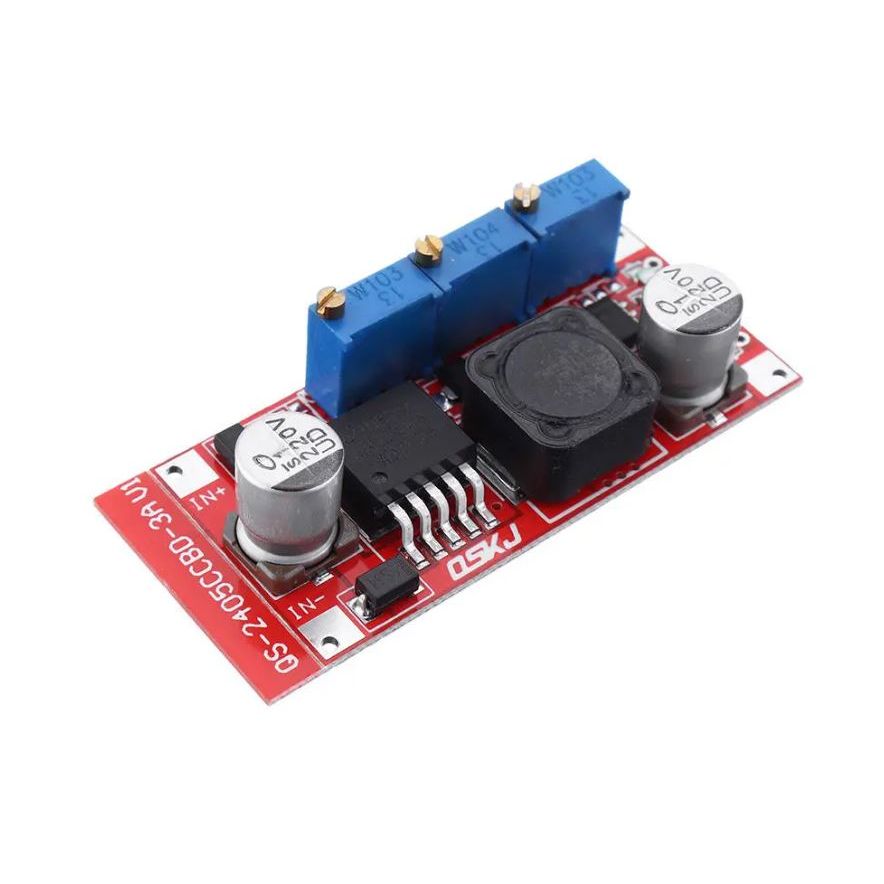

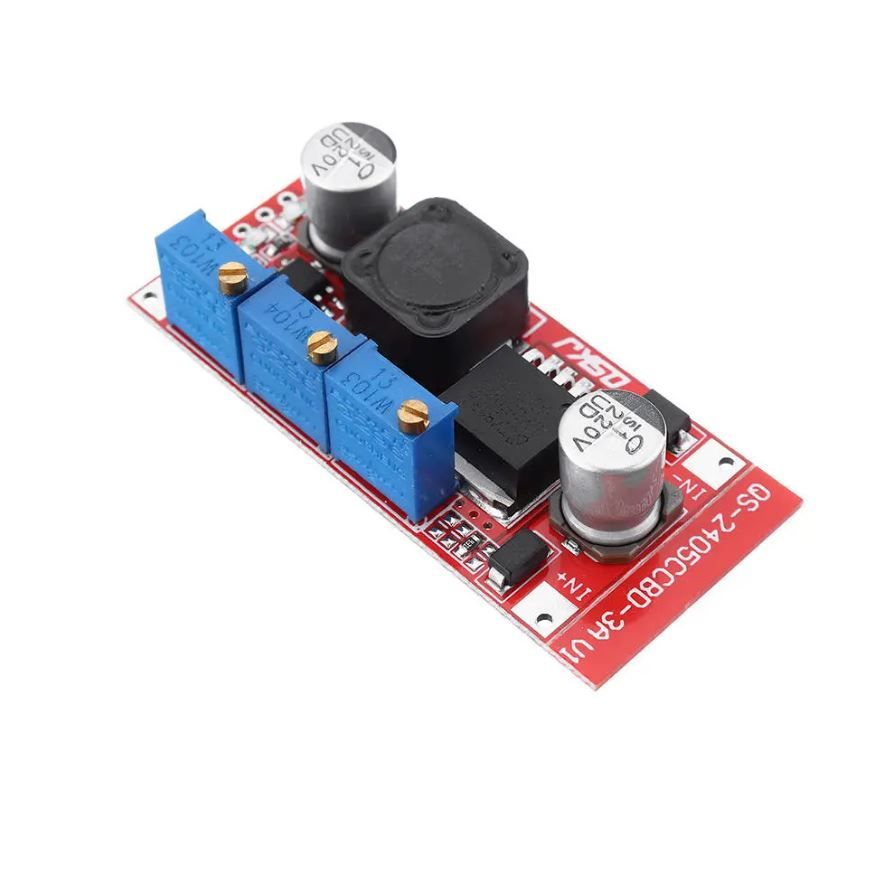


Converter charging module power supply from 7-35V to 1.25-30V Adjustable - 3A
Applications
Battery charger (including ferroelectric), 4V, 6V battery charger, 12V, 14V, 24V
nickel-cadmium nickel-metal hydride battery charger (battery), solar panels, wind generators.
nickel-cadmium nickel-metal hydride battery charger (battery), solar panels, wind generators.
Solar panel, wind generator voltage regulator, car power supply.
Technical specifications
- Input voltage: 7-35 V.
- Output voltage: 1.25-30 V.
- Output current: max 3A (if higher than 15W, please install the heatsink which is not included in the article)
- Constant current range: 0-3A (adjustable)
- Minimum voltage pressure: 2V
- Output power: 15W natural cooling, 25W with heat sink
- Conversion efficiency: 85% (the higher the output voltage, the higher the efficiency)
- Operating temperature: industrial (-40° C to + 85° C) (if the ambient temperature exceeds 40° C, reduce power consumption or improve dissipation heat)
- Temperature rise at full load: 45 °C
- No-load current: typical 10mA (12V to 4.2V)
- Load setting: ± 1%
- Voltage regulation: ± 0.5%
- Current Accurac and temperature: Actual Testing, changes of temperature from 20 degrees to 100 degrees, constant current value variation Less than 1% (constant current value 1A)
- Response speed dynamic: 5% 200uS
- Direction of adjustment of the potentiometer: clockwise (increase), anticlockwise (decrease)
- LED indicator: red charging LED, green charging full LED
- Output short circuit protection: YES
- Input reverse polarity protection: YES
- Corruption prevention Outgoing body: YES


Method of use
- 1.Check the charging voltage of the charging battery and the charging current, the input voltage of the module
- 2. adjust the constant voltage regulator, the output voltage about 3V
- 3. With a multimeter (at 10A) measure the output short-circuit current, also adjust the constant regulator that allows the output current to obtain a predetermined charge current value
- 4. Adjusting the constant regulator allows the output voltage to get the floating voltage
- 5. Connect the battery and try to charge
NB (In the first 4 steps connect the power but not the battery, connect it in the fifth step)
Please sign in so that we can notify you about a reply